
-
Mortar mixer 1,800W Rubi RUBIMIX-9 SUPERTORQUE
Vendor:RUBIRegular price 158,49€Regular priceUnit price per197,74€Sale price 158,49€Sale -
Rubi Mortar Mixer 2.100W RUBIMIX-9 POWER MAX
Vendor:RUBIRegular price 187,53€Regular priceUnit price per225,29€Sale price 187,53€Sale -
Electric mixer 2,100W Rubi RUBIMIX-9 POWER MAX with case
Vendor:RUBIRegular price 209,53€Regular priceUnit price per251,69€Sale price 209,53€Sale -
Rubi Electric mixer 1,800W RUBIMIX-9 SUPERTORQUE with case
Vendor:RUBIRegular price 185,61€Regular priceUnit price per224,63€Sale price 185,61€Sale -
Rubimix-16 Ergomax electric mixer - 1,600 W with case
Vendor:RUBIRegular price 204,43€Regular priceUnit price per257,46€Sale price 204,43€Sale -
Rubimix-16 Ergomax 1600W electric mixer
Vendor:RUBIRegular price 196,40€Regular priceUnit price per228,85€Sale price 196,40€Sale -
Rubimix-9 N electric mixer - 1,200 W
Vendor:RUBIRegular price 155,64€Regular priceUnit price per193,40€Sale price 155,64€Sale -
Rubimix-9 N electric mixer - 1,200 W with case
Vendor:RUBIRegular price 173,45€Regular priceUnit price per185,00€Sale price 173,45€Sale -
Rubi electric mixer RUBIMIX-7 1,200 W
Vendor:RUBIRegular price 114,11€Regular priceUnit price per148,34€Sale price 114,11€Sale -
Electric mixer 1600W 230V Bosch GRW 18-2 E
Vendor:BOSCHRegular price 671,55€Regular priceUnit price per705,43€Sale price 671,55€Sale


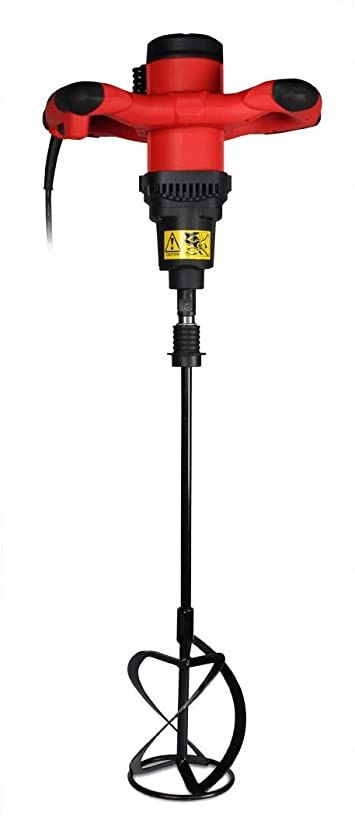


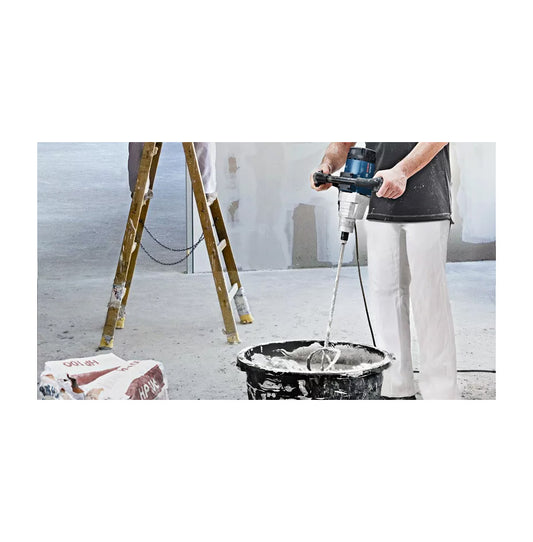
Get the perfect mixers for your project
Save time and effort on your renovation projects with the selection of professional mixers we have prepared for you. Whether you are looking for a lightweight mortar mixer for tiles or need the brute power of an electric cement mixer for heavy concrete, you will find the exact equipment in our online store. We work with leading brands such as Rubi and Bosch to guarantee maximum durability and optimal performance with every bag. Take advantage of our exclusive offers at competitive prices and receive your order within two to five days directly at the construction site, with complete peace of mind.
Guide to choosing your mixing equipment
Preparing mixtures by hand is a thing of the past if you want a homogeneous, lump-free finish in half the time. To achieve professional results in masonry, having good mixers makes the difference between backbreaking and efficient work. Mixing a fluid adhesive for ceramics is not the same as working with dense resins or large volumes of sand and water. That is why understanding the differences between the equipment will help you make the right purchase.
Variety of models according to the job
The construction industry offers different technologies adapted to every level of demand. If you work in interior renovations, tiling, or plasterboard installation, a mortar mixer with speed control lets you control the exact texture of adhesives and tile adhesives without introducing air bubbles. These machines are lightweight, easy to handle, and much less tiring for your back thanks to their ergonomic designs with dual handles.
For larger projects where the material volume is constant and dense, you need to move up to an electric cement mixer. These machines feature reinforced motors and gear systems designed to withstand the enormous resistance exerted by heavy aggregates. Meanwhile, the classic electric cement drum mixer or attachable paddle mixer is ideal for continuous work on site, far outperforming traditional concrete mixers when space is limited or you need mobility between floors.
How to choose the right equipment
To find out which model best suits your daily tasks, you should focus on three essential aspects of its technical specifications:
- Motor power: determines the equipment's pulling capacity according to the usual workload
- Gearboxes and variable speed: allows you to adapt the rod's rotation to the exact density of the mixture or fluid
-
Transport accessories: protects electrical components from impacts and fine construction-site dust
Having multiple mechanical speeds is excellent. Low speeds provide higher torque for highly viscous materials, while high speeds are perfect for thinning paints or mixing homogeneous fluids without overloading the machine's electrical system.
Importance of rods and coupling
Actual performance depends not only on the machine, but also on the accessory that comes into direct contact with the mixture. The type of rod determines how the product moves inside the tub or bucket. Three-blade helical rods are the most common for heavily loaded mortars because they push the material from the bottom upward, ensuring that no dry areas accumulate below.
The fastening system also determines operator comfort. The traditional standard is the fourteen-by-two thread, which is very secure but requires tools to change the rod. More modern models incorporate quick-coupling systems that allow the accessory to be removed in one second without the need for fixed wrenches, speeding up cleaning and transport in the work vehicle.
Performance and price comparison
Budget always plays a role when equipping the workshop or van. On our website, we make sure to offer a wide range covering everything from very affordable options for self-employed professionals or demanding hobbyists to high-engineering industrial machinery. Leading brands such as Rubi dominate the sector with their Rubimix range, known for its excellent balance between cost and durability, while Bosch contributes its advanced engineering in high-end motors.
Below, you can review the specifications of the most requested models in our current catalog:
|
Model |
Power |
Ideal application |
Price range |
|
Rubi Rubimix-7 |
1200W |
Paints and lightweight mortars |
Economical, under one hundred euros |
|
Rubi Rubimix-9 N |
1200W |
Ceramic adhesives and glues |
Mid-range, ideal for renovations |
|
Rubi Rubimix-16 Ergomax |
1600W |
Intensive use with height adjustment |
Professional, high ergonomics |
|
Bosch GRW 18-2 E |
1600W |
Large volumes and high viscosity |
Premium, maximum resistance |
|
Rubi Rubimix-9 Power Max |
2100W |
Heavy cements and dense putties |
High power, extreme performance |
Prices fluctuate depending on occasional offers and whether the item includes transport accessories or extra rods, usually ranging from ninety-seven euros for entry-level models to over five hundred euros for top-tier industrial tools.
Reasons to trust our online store
Buying your machinery from Brikum gives you the peace of mind of dealing with specialists who know the construction industry from the inside. We are not mere intermediaries: we select products one by one, ensuring they meet the safety and performance standards required in the European market.
We offer you clear benefits to make your experience complete:
- Fast shippingWe manage the packages so you receive them at your home or worksite within two to five business days
- Competitive pricesWe adjust our margins to offer you ongoing promotions on the best brands in the industry
- Professional supportWe resolve your questions before and after purchase so you can get the most out of your investment